
Back to Her Own Country: On the racism we still refuse to name — and how it quietly shapes the way we talk about immigration
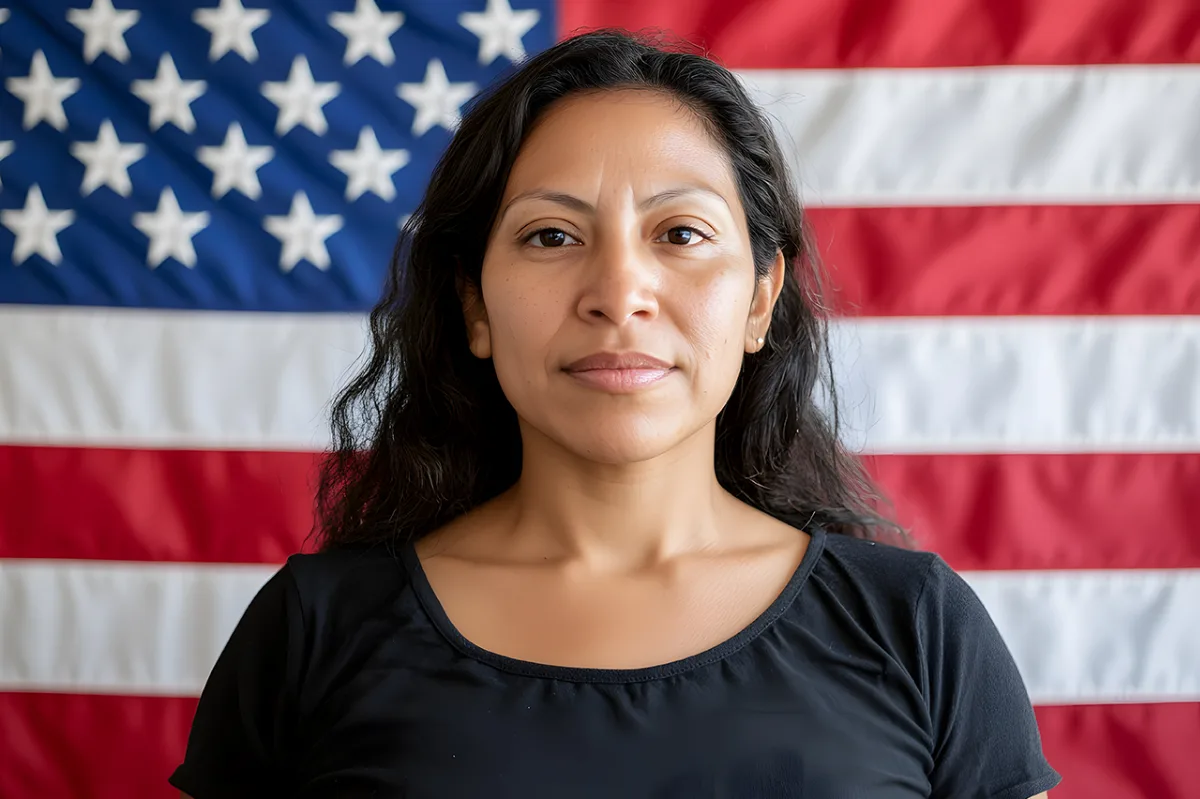
A few days ago, a manager at the grocery store down the road from our house was overheard talking about one of my daughters. She works there. She is good at her job. She was born in this country. And a grown woman, speaking to a customer, said of her: “She just needs to go back to her own country.”
I keep turning that sentence over. Her own country. She has no other. She was born here, the same as the woman who said it. The only thing she could have been reading was the color of her skin and the shape of a name.
My wife and I have two foster daughters. They are half-sisters. They are Hispanic; their mother is from Mexico; they were both born in the United States. And over this past year I have watched them get squeezed from both sides of a line I once thought I understood. At school, some of the undocumented kids taunt them for being citizens — for being, in their eyes, not really one of them. And some of the other kids treat them as though they must be undocumented — as though brown skin were itself a kind of paperwork. They don’t fit the categories, so both sides push them out.
I grew up in a home where racism was not tolerated, where I was taught to respect every person regardless of where they came from. My wife and I have spent our lives in ministry, in missions, in public schools — serving people, all kinds of people. I believed I understood this. I did not, not really, until it was sitting at my own kitchen table.
So let me say plainly what I have been slow to say: racism is not a chapter we have closed. It is a sin we are still committing. And it is wider than most of us were taught to imagine.
A bigger map than we were given
Many of us learned to picture racism as a single line — Black and white, North and South, a wrong that belonged mostly to the past. That picture is not false, but it is far too small. The contempt my daughters meet does not fit on that line at all. Neither does the suspicion aimed at the Asian neighbor, the Middle Eastern coworker, the Indigenous family, the immigrant congregation across town. Sin is more creative than our categories. Wherever there are human beings to look down on, the human heart finds a way.
We are tempted toward a comfortable answer here — I don’t see color; I treat everyone the same. I understand the instinct, and I believe most who say it mean well. But a child who has been told to go back to a country she has never lived in does not need us to stop seeing her. She needs us to see her clearly — and to see what was done to her clearly enough to call it what it is. Pretending not to notice is not the same as love. Sometimes it is just a quieter way of looking away.
Start where Scripture starts
Before this becomes a conversation about policy — and it will — it has to be a conversation about people. And Scripture will not let us begin anywhere but the beginning.
“God created man in His own image… male and female He created them” (Genesis 1:27). Before nation, before language, before legal status, before any document a government can issue or revoke, there is this: every person you will ever meet is a bearer of the image of God. That dignity is not earned and cannot be forfeited. It is stamped on the newborn and the elderly, the citizen and the stranger, the person whose paperwork is in order and the person whose is not.
The early church had to learn this the hard way. Paul told the philosophers in Athens that God “made from one man every nation of mankind” (Acts 17:26). One source. One family. The nations are real, but they are branches of a single tree. And when Peter stood in the house of a Roman officer — a man on the wrong side of every boundary a faithful Jew was taught to keep — he said the thing that should still undo us: “God is not one to show partiality” (Acts 10:34). Paul puts it just as flatly: “there is no partiality with God” (Romans 2:11).
Sit with that. The God we worship does not rank His image-bearers by origin. If He shows no partiality, then partiality — preferring or despising a person for the accident of their ethnicity — is not a personality quirk or a regional habit. It is rebellion against the character of God. It is idolatry wearing the mask of prudence.
And lest we imagine this is only a New Testament concern, recall how relentlessly the Law pressed it on Israel. “The stranger who resides with you shall be to you as the native among you, and you shall love him as yourself, for you were strangers in the land of Egypt” (Leviticus 19:34). Love him as yourself. Treat the foreigner as native-born. And the reason given is memory: you were strangers once. Israel was forbidden the luxury of forgetting where it came from.
When Israel did forget — when it began to treat its election as a license to despise outsiders — God sent a reluctant prophet to a city he hated, and then rebuked that prophet for grieving over a withered plant while caring nothing for a hundred and twenty thousand souls in Nineveh (Jonah 4). The book of Jonah is, among other things, a mirror held up to ethnic contempt dressed in religious clothing. It is not a flattering mirror. Few of us come out of it looking good.
And where does the whole story land? In a vision of “a great multitude which no one could count, from every nation and all tribes and peoples and tongues” standing together before the throne (Revelation 7:9). Not a homogenized crowd. A gloriously diverse one — every tongue, every tribe, still distinct, finally reconciled. That is the country we are ultimately citizens of. That is the future we are being shaped for. A church that nurses ethnic contempt is not merely failing an ethics test; it is rehearsing for the wrong eternity.
Now — and only now — to politics
I have put the kingdom first on purpose, because I think much of our trouble comes from putting it last. We arrive at the immigration debate already armed, already sorted, already certain which side our patriotism requires — and then we go looking for a verse to bless the position we brought with us. I want to do this in the other order.
So let me be careful and fair, because this is where it gets tense.
A nation may rightly govern its borders. This is not unchristian. The civil magistrate is given real authority to preserve order and pursue the common good. A country may ask how many people it can welcome well, what its laws require, how to balance compassion with sustainability. Those are legitimate questions, and a Christian can hold firm convictions about them in good conscience. Love of one’s own country — gratitude for a place, a people, a history, a home — is not a sin. It can be a genuine good.
But here is what I have come to see, and what I could not see until my daughters made me see it: racism has learned to travel inside that legitimate conversation. It hides there. It borrows the language of law and order and the common good, and it uses that borrowed language to do something the law never asked it to do — to despise a kind of person.
How do you tell the difference? My daughters are the test case. They are citizens. There is no policy question about them at all. And they were still told to go back where they came from. Which means the woman at the grocery store was never really talking about immigration law. She couldn’t have been. She was talking about her face. The legal argument was never the point; it was the cover.
That is the tell. When concern about immigration can be satisfied by a status check, it is a policy concern — and policy concerns are fair game for honest disagreement among Christians. But when the contempt remains after the paperwork is in order — when a citizen child is told to leave, when the real objection turns out to be the sound of a name, the color of skin, the smell of a kitchen — then we are no longer talking about borders. We are talking about an old sin with a new vocabulary.
I worry about a strain in our current moment that fuses love of country with contempt for certain people, until “America first” quietly curdles into “people like us first.” It speaks of invasion and replacement, of certain nations being undesirable in a way that has nothing to do with any individual’s character and everything to do with their blood. It treats whole populations as criminal, diseased, less than. That is not patriotism. Patriotism loves a country. This despises a people. They are not the same thing, and we lose something of our souls when we let the second hide behind the first.
A word to my own house
I am not writing this to people who would never darken the door of a church. I am writing it to mine — to those of us who love Scripture, who would say without hesitation that every person bears God’s image, and who have nonetheless let the noise of the moment do our thinking for us.
It is a particular temptation for those of us who are conservative and Christian, and I say this as one of you. We are rightly grateful for our country. But gratitude can slide into something else when we are not watching — when national identity starts to feel like spiritual identity, when the flag and the cross get folded together until we can no longer tell which one we are actually serving. The danger is not loving America. The danger is loving America in a way that lets us look at an image-bearer and feel something other than the love of God.
Scripture does not let us off the hook with good intentions. James says that if we show partiality, we commit sin and are convicted by the law as transgressors (James 2:9). Not “fall short of an ideal.” Sin — the same word we use for the things we are quick to condemn in others.
So the call here is not defensiveness. It is repentance — the ordinary, hopeful, Christian kind. Naming a sin honestly is the first step toward being free of it.
What love actually requires
Let me bring this down to the kitchen table, because that is where it became real for me.
See the face. Every immigration statistic is a person, and every person is an image-bearer Christ died for. Lose sight of that and you will lose sight of everything that matters.
Name the sin honestly — including when it shows up in people you agree with. If a brother or sister uses a slur, traffics in stereotypes, or reduces a whole nation to a threat, love does not stay silent. Love says, gently and clearly, that is beneath the gospel, and beneath you.
Refuse the false choice. You do not have to pretend borders don’t matter in order to refuse contempt for the people crossing them. You can hold a firm policy conviction and a tender heart at the same time. In fact the gospel asks for both: the magistrate may enforce the law, but the Christian must never enforce it with cruelty, contempt, or the reduction of a human being to something less than human.
Practice hospitality you can taste. Leviticus did not ask Israel for warm feelings about strangers; it asked them to love the stranger as themselves. Know the immigrants in your community by name. Put them at your table. Show your children, by what you do and not only by what you say, that the love of God has no border.
The woman at the grocery store told my daughter to go back to her own country. But she is already home — and more than that, she belongs to a kingdom whose King shows no partiality, and whose throne will one day be surrounded by every nation, tribe, and tongue. That is the country I am raising her to long for. It would be a strange thing to teach her to long for that kingdom while tolerating, in my own heart or my own church, the very contempt that kingdom came to heal.
Whose kingdom? is the question underneath every one of these arguments. And we will not answer it well at the ballot box if we have not first answered it at the kitchen table.