
The Words After the Blows
A pastoral response to the Tony Spell case — and to the punchline that followed it
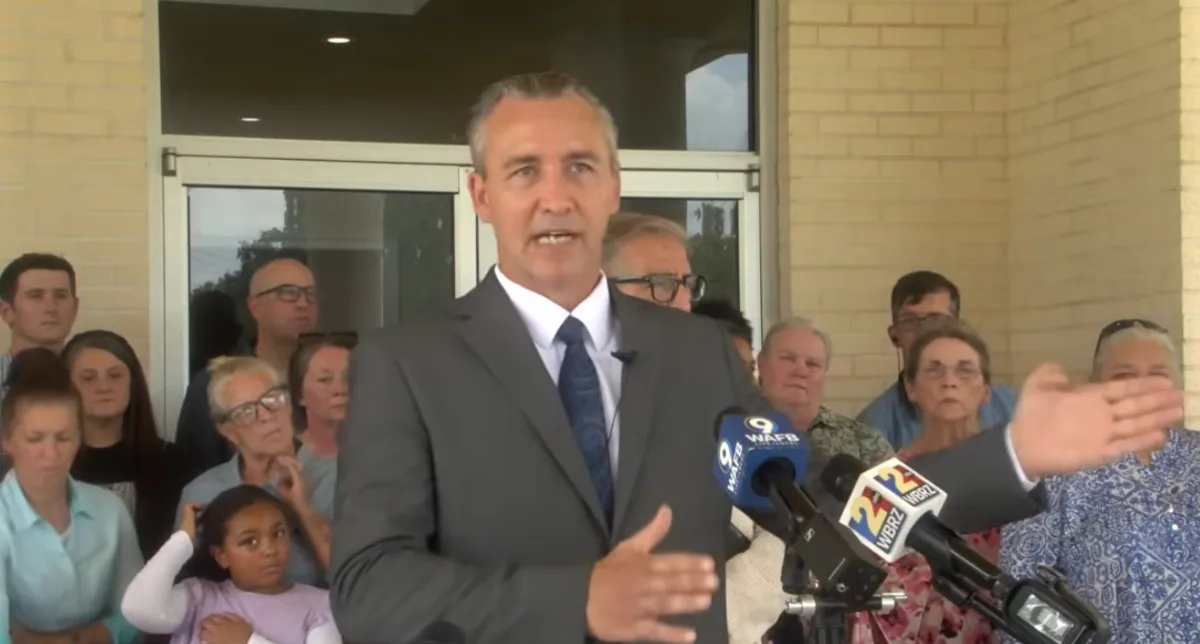
I write this with no pleasure, and I want to be honest about that before I write another line, because the temptation in a piece like this is to enjoy it, and the moment a man enjoys correcting another man he has already joined him in the ditch. I write as a pastor about a pastor. The man in question is Mark Anthony “Tony” Spell of Life Tabernacle Church in Central, Louisiana, and on the morning of June 23 he crossed four lanes of Hooper Road and beat his neighbor’s twenty-year-old son to the ground. The threats Spell says provoked him — vile, unrepeatable threats against his wife and grandchildren — are alleged, denied by the other family, and unproven, and I will not build anything on them. I want to build only on what is not in dispute, because what is not in dispute is damning enough, and most of it happened after the fists were finished.
A word, first, about why I am writing this in public, with his name in it, when so much of what I teach about leadership counsels against pointing at the fallen. The principle is simple and old. What is done in secret may be corrected in secret, but what is done in the open is corrected in the open. Paul did not write Peter a private note; he “withstood him to his face” and did it “before them all” (Galatians 2:11, 14), and his instruction to Timothy was that those who sin should be rebuked “in the presence of all, that the rest also may fear” (1 Timothy 5:20). Pastor Spell crossed the road in public, defended himself at a press conference, and then preached the whole thing from his own pulpit to a room that laughed. The matter was made public by the man himself. A public word is the only honest response left.
The tell is not the punch
Let me grant what can be granted. A husband and father may feel his blood rise at a threat to his family, and Scripture does not ask him to feel nothing — “Be angry, and do not sin” leaves room for a holy heat (Ephesians 4:26). If Pastor Spell had told the cameras that he had done a terrible thing, that he was sick about it, that he had lost his temper and needed the Lord’s mercy and his neighbor’s forgiveness, this would be a very different article, and a far shorter one. We could speak of a man overtaken in a fault and the gentleness that restores him (Galatians 6:1).
That is not what happened. What happened is that the act had an afterlife, and the afterlife is the tell. At his press conference he framed the beating as obligation — “I have a duty and obligation to do what I did” — and reached for the shepherd’s mantle to cover it: “It’s not the job of the sheep to attack the wolves; it’s the job of the shepherd to protect his sheep.” Then he went to the house of God, stood in the place where the word is supposed to be handled with fear, and turned the bloodied face of a young man into a joke: “I fulfilled the scripture, because I laid hands on the sick. I don’t know how much recovery they’re going to have, but I laid hands on them.” And the room laughed. He called the affair “domestic terrorism” and stood taller for it.
Here is the thing a man learns if he reads the Scriptures long enough. The heart is not most exposed in the heat of an act, when the blood is up and a hundred motives are tangled together; it is exposed in the cold hour afterward, in what a man does with what he has done. David, when his enemies fell, did not crow — he tore his clothes and wept, even over Saul who had hunted him. Paul wrote of the enemies of the cross “even weeping” (Philippians 3:18). The mark of a man whose motive is clean is that violence grieves him even when he believed it necessary; he does not take it to the stage. The laughter in that sanctuary is not a small thing. It is the indictment. A clean conscience does not need an audience, and it never needs applause.
The whole counsel of God points the other way
Set the pulpit punchline beside the actual witnesses of Scripture and the distance is the whole gospel. When Stephen was being stoned — not threatened across a highway, but struck with rocks until he died — he knelt and prayed, “Lord, do not charge them with this sin” (Acts 7:60). He learned it from his Master, who from the cross, with the nails already in, said, “Father, forgive them, for they do not know what they do” (Luke 23:34). This is not a stray verse to be balanced against others. It is the spine of the New Testament’s teaching on how the people of God meet evil:
“Repay no one evil for evil.” (Romans 12:17, NKJV)
“But I say to you, love your enemies, bless those who curse you, do good to those who hate you, and pray for those who spitefully use you and persecute you.” (Matthew 5:44, NKJV)
“Beloved, do not avenge yourselves, but rather give place to wrath; for it is written, ‘Vengeance is Mine, I will repay,’ says the Lord.” (Romans 12:19, NKJV)
The path the Lord walked, and the path He commanded, is to absorb the offense and entrust the outcome to the God who judges righteously — the very thing Peter says Christ did when “He was reviled” and “did not revile in return,” but “committed Himself to Him who judges righteously” (1 Peter 2:23). This is not cowardice and it is not passivity; it is the hardest courage there is, the courage to be wronged and to wait on a verdict that is certain because Another holds it. The taunt Spell reports — “what are you going to do about it?” — is a question addressed to the flesh, and the flesh answered it with thirty-some blows. The Spirit answers it with silence, because the Spirit knows Who will answer it in the end. “The wrath of man does not produce the righteousness of God” (James 1:20). It never has. It never will.
The graver sin is what he did to the word
A man may lose a fight with his temper; it is a sad and common thing, and grace is deep enough for it. But there is something in this story graver than the violence, and it is the thing that ought to trouble every preacher who watches the clip. Pastor Spell took the words of the Lord Jesus — “they will lay hands on the sick, and they will recover” (Mark 16:18), a promise of healing, of mercy, of the kingdom breaking in on broken bodies — and he made them the setup for a joke about leaving a man bloodied on the grass. That is not wit. That is not a clever turn from a quick mind. It is a gross handling of the word of God by a man who claims the office of one who is supposed to handle it rightly.
Paul’s charge to Timothy was to be a worker “rightly dividing the word of truth” (2 Timothy 2:15), and James warns that those of us who teach “shall receive a stricter judgment” (James 3:1). The stricter judgment is the point. When an ordinary man swings in anger, the church grieves and prays for him. When a man who stands behind a pulpit takes the healing words of Christ and bends them into a boast about the harm he has done, and the gathered church laughs, the damage is not contained to one front yard. The word itself has been mishandled in the house where it is meant to be feared, and the people have been trained, in that moment, to laugh at the bending of it. That is the wound that does not photograph. That is the one that lasts.
Why this is written in hope
I have no standing to weigh Pastor Spell’s soul, and I am not trying to. Only the Lord weighs the spirits (Proverbs 16:2), and I am as capable of self-deceit as any man who ever crossed a road in anger. The rage that drove that beating lives in quieter clothing in the rest of us — in the email we draft to settle a score, in the cold silence we administer as punishment, in the running ledger we keep of who has wronged us and what they owe. If this article does its work, it will turn most of its readers not toward Central, Louisiana, but toward the mirror, which is the only honest direction a piece like this can finally point.
But correction written in hope is still correction, and the hope is real. The aim of a public word is never the destruction of the man; it is the protection of the watching church and the recovery of the brother. So I will say it plainly, as I would want it said to me. Pastor Spell, the act was wrong, and the words after it were worse, and the use you made of Scripture from your own pulpit was a thing no man called to divide the word should ever do. There is a road back, and it does not run through a press conference. It runs through the same door Stephen and your Lord went through — the door of mercy toward the one who wronged you, and of repentance before the One you represent.
“Do not be overcome by evil, but overcome evil with good.” (Romans 12:21, NKJV)